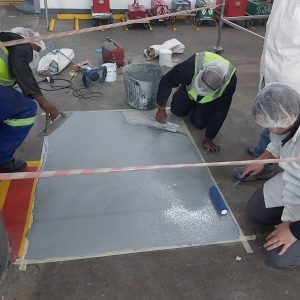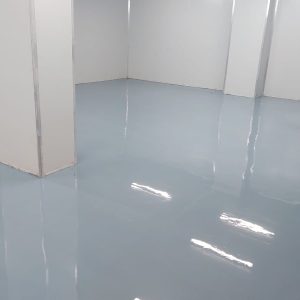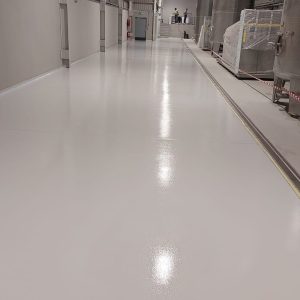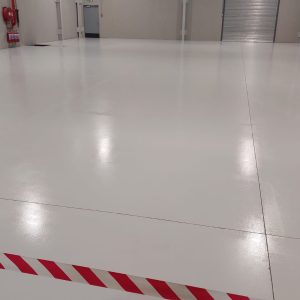
Epoxy & Polyurethane Resinous Flooring Systems.
Epoxy and polyurethane systems are advanced coatings used to enhance and protect concrete surfaces. Each system has unique properties and applications.
Epoxy Systems:
- Composition: A two-component mixture of resin and hardener that forms a rigid, durable plastic material.
- Properties: High strength and durability, Excellent chemical and abrasion resistance, Versatile in thickness and finish options
- Applications: Industrial and commercial flooring, Garage floors, Workshops, Laboratories
- Types: 100% solids (no solvents or VOCs) Waterborne, Solvent-based
- Benefits: High-gloss finish, Impact resistant, Withstands heavy traffic and equipment, Resistant to oil, grease, and chemicals
Polyurethane (PU) Systems:
- Composition: A two-component mixture of isocyanate and polyol that forms a flexible, elastic material.
- Properties: High flexibility and elasticity, Good abrasion resistance, Excellent UV resistance, Versatile in thickness and finish options.
- Applications: Industrial and commercial flooring, Waterproofing and sealing, Coatings for walls and ceilings.
- Types: Waterborne, Solvent-based, Moisture-cured
- Benefits: Flexible and impact resistant, Excellent UV stability and color retention, Various gloss and texture levels, Resistant to oil, grease, and chemicals.
Key Differences:
- Epoxy: More rigid and durable, higher chemical resistance, ideal for high-traffic areas.
- Polyurethane: More flexible and elastic, better UV resistance, suitable for areas with heavy equipment or temperature fluctuations.
Both systems offer superior performance and durability. The choice between epoxy and polyurethane depends on project requirements and site conditions.
Pricing is subject to site evaluation and scope.